BTV News report on Zendō (by Jane Dimitrova, 21 October 2026). The full text and video report can be found in the original publication.
‘If we manage to develop handpan tourism in Bulgaria, that would be wonderful’
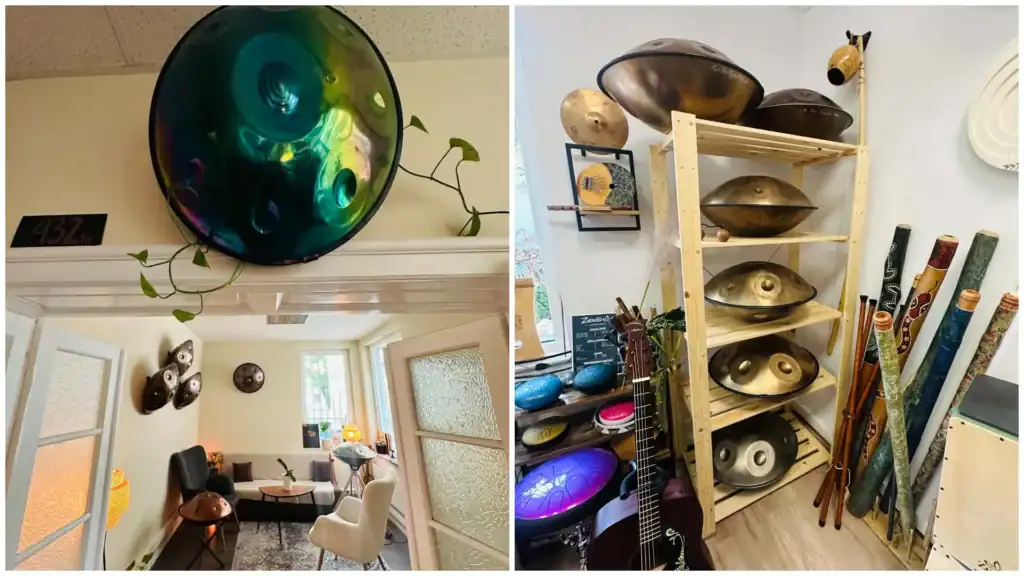
In the centre of Sofia, there is a special place that draws visitors in with its distinctive musical sounds and rooms whose walls are adorned with metal flying saucers. Among them are cajons in unusual shapes and long, colourful didgeridoos. One of the rooms is called 432 Hz.
In the centre of Sofia, there is a special place that draws visitors in with its distinctive musical sounds and rooms whose walls are adorned with metal flying saucers. Among them are cajons in unusual shapes and long, colourful didgeridoos. One of the rooms is called 432 Hz.
And when someone steps over the threshold, feels the energy of the place and picks up one of the instruments, they usually return to their everyday life with a new idea, renewed enthusiasm and a deeper connection with themselves.
Sometimes he emerges like a tortoise – with a round ‘shell’ on his back, inside which he already carries a whole magical world.
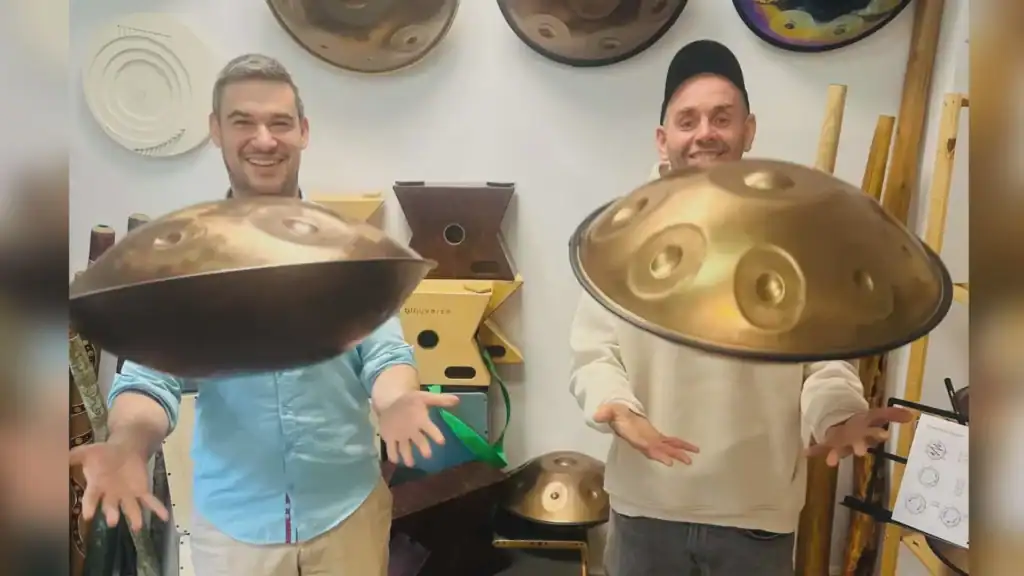
This is the Home of the Handpan, and its hosts are Petar Yordanov – Bunny – and Ilian Oprev – two people who have followed different paths, but who share a common belief in the power of sound as a means of connection, inspiration and inner transformation.
Petar Yordanov – Bunny is a world-renowned musician, composer and multi-instrumentalist, known for his work with groups such as ‘Oratnitsa’, ‘Tupani’ and ‘Gaidi’, ‘Osnovno Vetrove’ and many others. He is a pioneer of the handpan culture in Bulgaria, having run hundreds of workshops across the country over the last 10 years.
Iliyan comes from the world of design and handmade brands. He is the founder of a marketing agency, a consultant and a long-standing creative partner to a number of iconic global brands. Through his personal practice of meditation and sound, he discovered the handpan as an instrument that bridges music and spirituality.
We’re meeting up with Bunny and Ilian so they can tell us more about the specifics of the handpan, how more and more people are connecting with the instrument, and how that connection makes them feel.
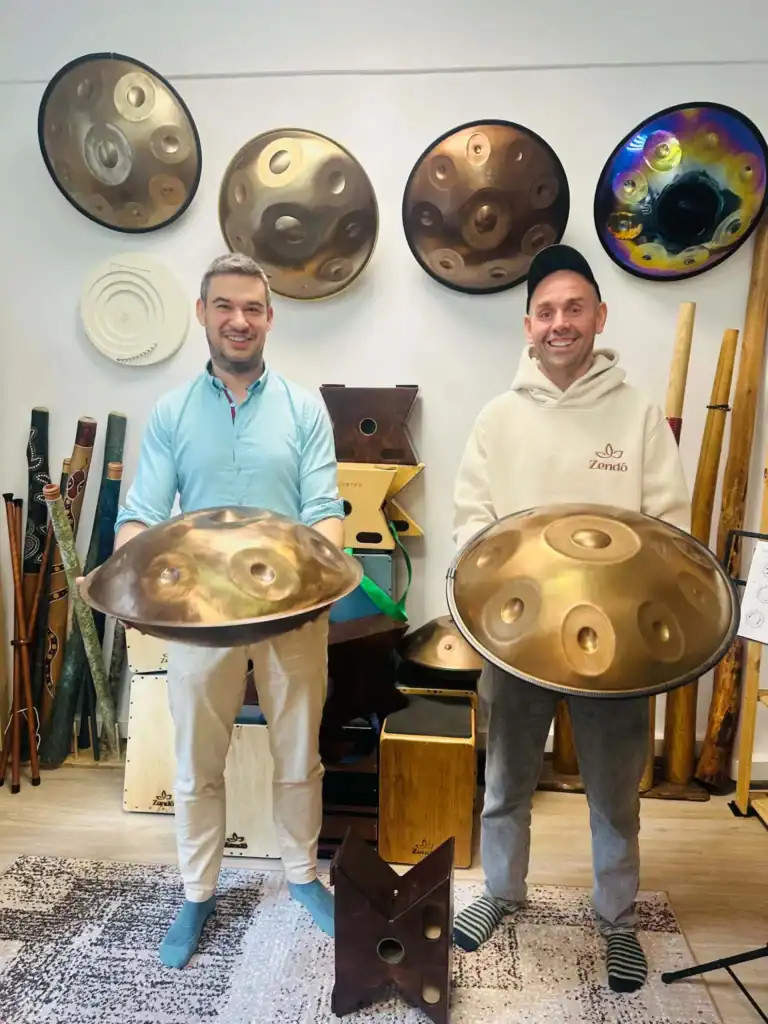
They also explain that handpan players are gradually building their own community, and that Sofia is becoming a magnet for musicians from all over the world.
The magic of the handpan
Bunny says that when he first saw a handpan, he was completely spellbound. “Outside the National Theatre, I saw a Frenchman – I just stood there watching him. And I couldn’t wait for him to stop playing so I could ask if I could have a go. And when I did, I just started playing somehow.”
‘These instruments drew me in and captivated me with their sound. And now they’re constantly all around me, everywhere. I’ve got some in my car, some at home, and some here too. They’re simply part of my everyday life,’ says Bunny.
From a challenge to an opportunity for everyone
“These instruments used to be more of a challenge to get hold of – you’d have to apply for one, get approved, have an instrument made for you, wait a while, and so on. But now, once you have the instrument, that challenge – which music sometimes hides – is lost when you’re actually playing,” says Ilian.
He and Bunny are ensuring that the handpan is no longer a challenge for people, but an opportunity open to anyone who is drawn to its sound.
“The handpan, as a concept, has various interpretations. There are travelling musicians who experience it in different ways. It is also associated with freedom, rebellion and a more revolutionary spirit. But in our interpretation, the instrument is very spiritual. It is an instrument for the soul. The idea is for it to be a place where you can connect with yourself – a place for Zen,” commented Ilian.
Time for myself
In the Handpan House, which Bunny and Ilian have christened Zendō, there are over 30 ‘flying saucers’ – as this instrument is often called. They each have a different sound and have been crafted by master artisans from several continents.
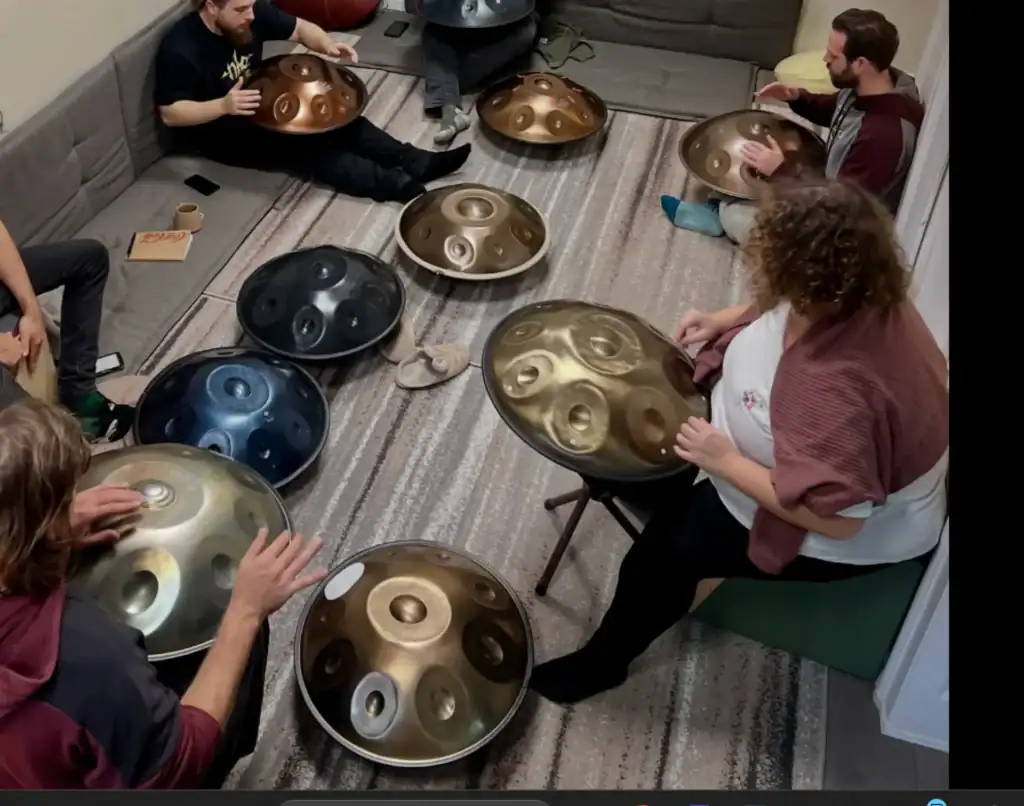
“Everyone needs some time to themselves. Especially in this age of artificial intelligence, hectic daily life and social media – with everything that’s going on around us – we need that time. Here, you have the chance to simply pause and savour the moment. The tactile experience is important too,” commented Ilian.
“With artificial intelligence and everything we’re doing at the moment, a large part of our experiences are becoming virtual and abstract. But physical contact with the instrument brings us back to something very human – to the unique sensation of being human through music. We want to enrich this range of experiences,” he adds.
Luthiers from all over the world
“We tune the instruments here and make sure they sound good,” says Peter.
“There are still no people in Bulgaria who do this. Fortunately, we are in contact with luthiers from all over the world. They have already visited us three times. A fourth visit is now on the cards. They come, show us their work, and we keep in touch. It’s important for the instruments to be well-tuned so that you can appreciate their full quality. Otherwise, there’s no complete harmony if the instruments aren’t properly tempered,” he explains.
The handpan is tuned with a hammer – both firmly and precisely.
To avoid a tinny sound
“There are instruments that people can find on various platforms. They resemble a handpan. But this therapeutic sound comes from the overtones. Every note, apart from the fundamental tone, which is ‘D’, has two more overtones that sound like a Tibetan singing bowl. That’s where the richness and magic of the sound come from. Sometimes you might pick up an instrument that looks very similar, but it sounds rather tinny and flat, with an imprecise tone. “You start playing and sometimes people say to themselves: ‘OK, the problem is with me.’ And that stops them from playing; it puts them off the whole musical process,” adds Iliyan.
Over the past year and a half, dozens of events have been held at the Handpan House – ranging from music and the study of sound frequencies, concerts in the dark, and workshops for young and old, to vocal workshops, meditation sessions, tea ceremonies, watercolour painting, songwriting, calligraphy embroidery and much more.
Today, there is also a handpan school there, offering both individual lessons and group sessions. The space provides a haven for various initiatives. Some of the events take place in the Rhodopes. The sounds of the handpan also have a social dimension. Ilian and Bunny visit centres for people with special needs, centres for the deaf and hard of hearing, schools and nurseries.
The folk song ‘Ergen Deda’ – a choral performance accompanied by the handpan.
Zendō is also behind initiatives such as playing music on the underground on Sofia Day and filming a music video for the folk song ‘Ergen Deda’ – a choral performance accompanied by the handpan.
“We set up the Handpan Collective when we launched the House of the Handpan; the idea was to organise a friendly get-together. When I invited the choir conductor to come with her husband, she’d thought I’d invited her and the whole choir, so they all turned up. Here’s a short video from that room, where some of the choir members had climbed onto the sofa, whilst others were at the front so that we could all fit in. We were arranged in three rows,” says Bunny.
They’ve been planning the video for almost a year. They’re filming it in front of the Alexander Nevsky Cathedral.
We went to film; it was April, the sun was shining, the tulips had been planted and… it started snowing. The scene was tulips and snow. But we carried on filming anyway; we didn’t give up. We were like Spartans, wrapped up in scarves. This little clip really stands out because it was such a difficult process,” he adds.
Although the creative process can sometimes be challenging, the bond between handpan musicians turns out to be remarkably natural. They connect with one another effortlessly and feel united by the shared frequencies they radiate into life.
Guest performers
Building a community
“It’s very easy to make connections in this handpan world. The same goes for the craftsmen. We have one master whose girlfriend is Bulgarian. He came here, saw another master’s instrument and said, ‘Ah, but that’s Marius’s instrument!’ and his face lit up. And here, as well as masters who make the instruments themselves, we also have masters of the craft of playing them,” Ilian added.
Among them is Daniel Waples – a Briton and one of the first ambassadors for this instrument. He discovered the handpan in 2005–2006 and has travelled with it to various countries.
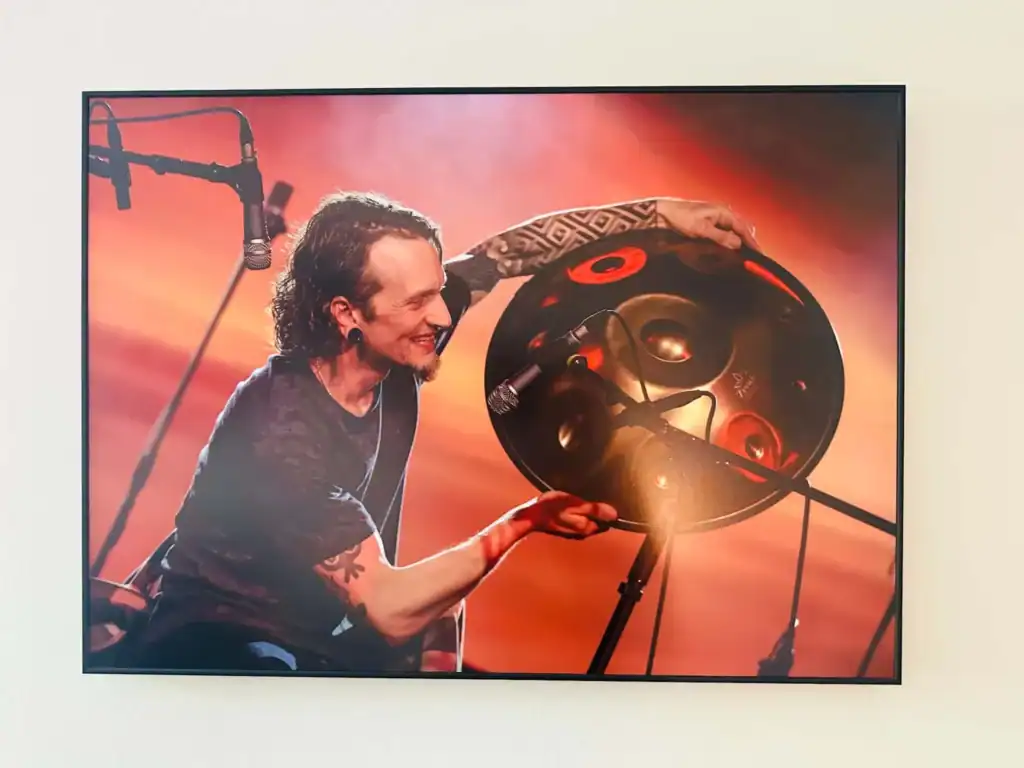
“He has taken the instrument to over 90 countries. He first visited Kuwait, Bangladesh and India with it. Daniel came to us through another friend from Croatia, who had also been here. He, in turn, got to know us through other musicians and recommended his musician friends to us – such as Reo Matsumoto, a Japanese handpan player who is also passing through Bulgaria,” says Iliyan.
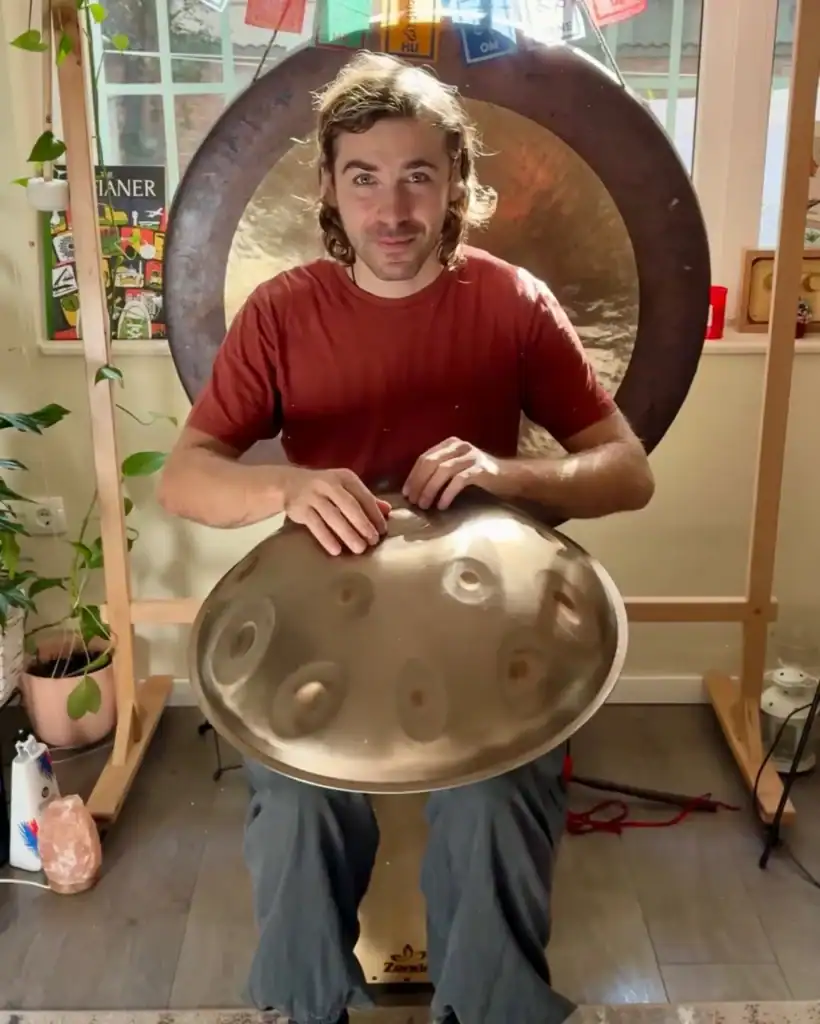
‘So, somehow the energy builds up and handpans start to grow on the walls.’
“It’s a slightly more alternative culture. A slightly more noble one. It doesn’t dwell on the baser aspects of passion. It’s an idea that elevates. But that does require a certain level of interest, a deeper exploration. There are challenges along the way. The thing is, it’s incredibly energising. And once it starts to happen, somehow things fall into place. As long as you keep going,” he adds.
‘We’ve witnessed lots of unique situations that happen, a bit like in *The Celestine Prophecy*. Just going with the flow,’ says Bunny.
“An African musician also visited us here. We were also visited by an Indian musician who conducts various workshops in many places and is quite popular in those circles. Together with the handpans, we did some very interesting things. We were also visited by a Belgian who plays the African kora – an extremely rare instrument. In Bulgaria, I’ve only ever seen such an instrument with him. And once again, we combined the sound of the kora with the handpan,” says Bunny.
“We were also visited by musicians from Greece who play the ancient Greek harp. The African kora is also a stringed instrument linked to the traditions of the harp and the lyre, but the Greek instruments take us back to the image of the harp and the lyre from the time of Homer. Instruments reconstructed from archaeological finds have been preserved to this day. We were visited by master craftsmen who not only performed music on them but also crafted them themselves. It was extremely interesting and impressive,” adds Ilian.
“We are delighted that, in addition to the events we manage to organise locally with Bulgarian artists, this space is also becoming a meeting point for international guests. They come from Africa, Greece, the UK, the Balkans and Croatia. This makes us very happy. This free network of musicians is vibrant, evolving and inspires us. It also enriches the cultural scene,” he says.

“Another thing we’re aiming for this year is to welcome not only guest musicians, but also participants from other countries. One of our summer residencies was aimed at an international audience. Roughly half the participants were from abroad – there were people from Spain, Italy, Barcelona, the UK, Belgium and Russia. So the handpan is just the starting point. Alongside it, more people, instruments, traditions and places come into the picture.”
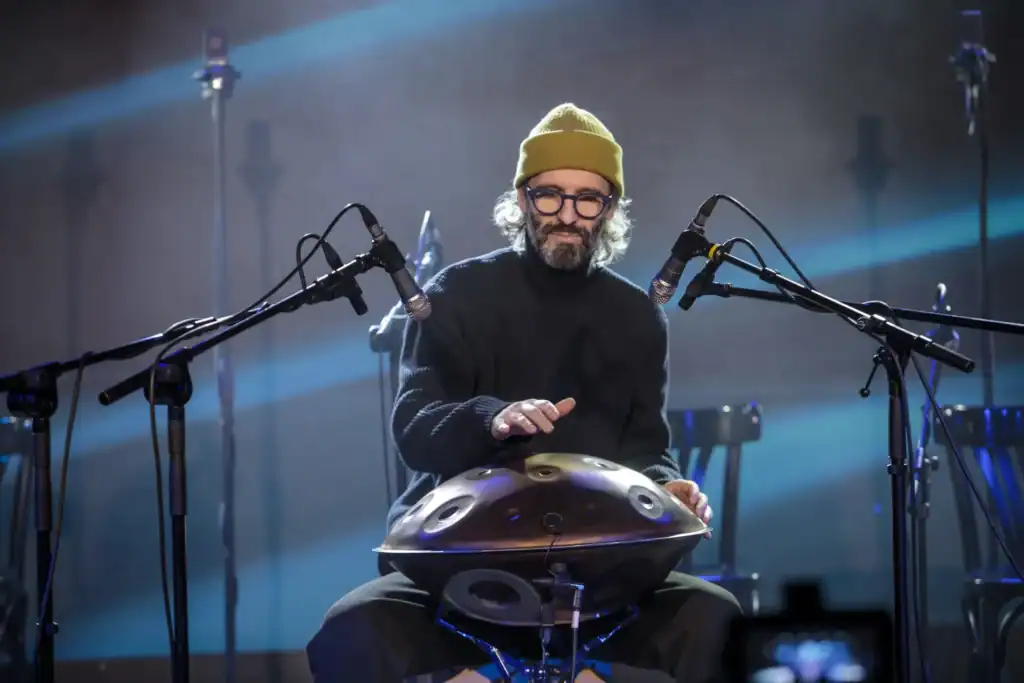
‘The moment you open your senses to this, you begin to realise just how many things are interconnected,’ says Ilian.
Handpan tourism
“If we manage to develop handpan tourism in Bulgaria, that would be wonderful. There are already handpan festivals in various countries around the world. The instrument is relatively new, but it easily finds its place in various musical styles and traditions – from electronic to folk music. It is accessible and fits naturally into different musical contexts,” says Ilian. According to him, children also pick up the instrument very quickly.
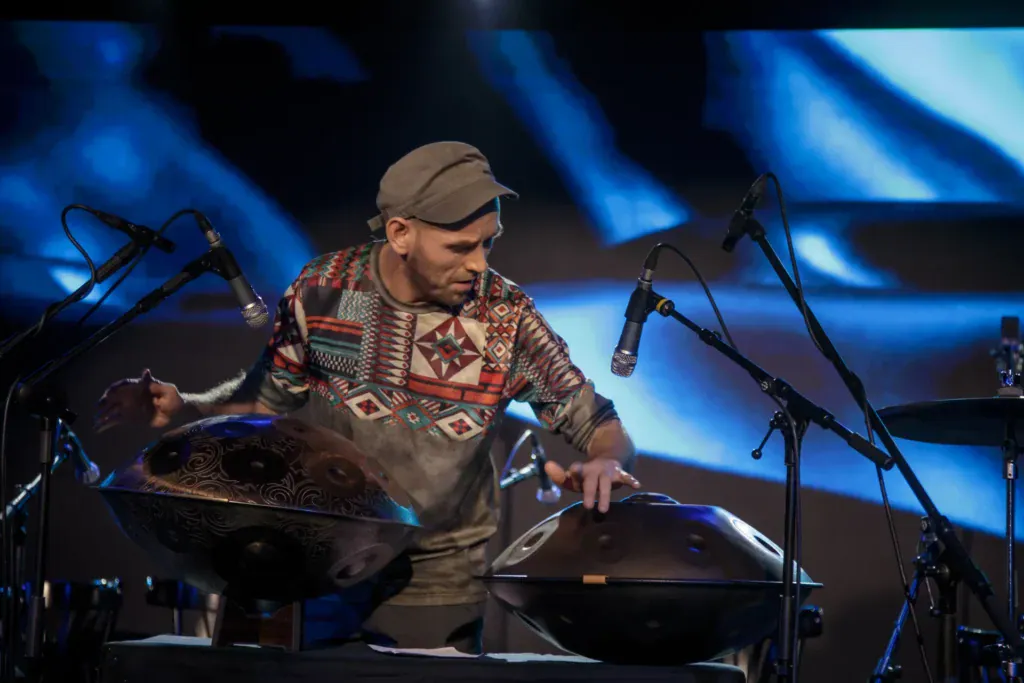
“Here in Bulgaria, too, we have good prospects for something like this to happen. Handpan tourism is a perfectly viable idea. I have travelled to other countries specifically for such events. It’s possible that at some point this could happen here too. We’re gradually working towards this, although we’re still a relatively small community,” adds Bunny.